Wondering what a full interpretation looks like? See a sample report →
What “Bacteria in the Urine” Does and Does Not Tell You
Bacteriuria simply means that bacteria were detected in a urine sample. That single observation is the start of the workup, not the end of it, because bacteria can reach a urine sample by two very different routes. They may have been multiplying inside the bladder, which is a genuine infection, or they may have been picked up on the way out – from the lower urethra, the skin around the opening, or a litter tray or collection bowl. Telling those two apart is the whole point of the workup, and it is why a careful veterinarian does not reach for antibiotics the moment bacteria are mentioned. The reading hinges on three things considered together: how the sample was collected, what else the urine shows, and what the cat is actually doing at home.
Why the Collection Method Decides How Much to Trust the Result
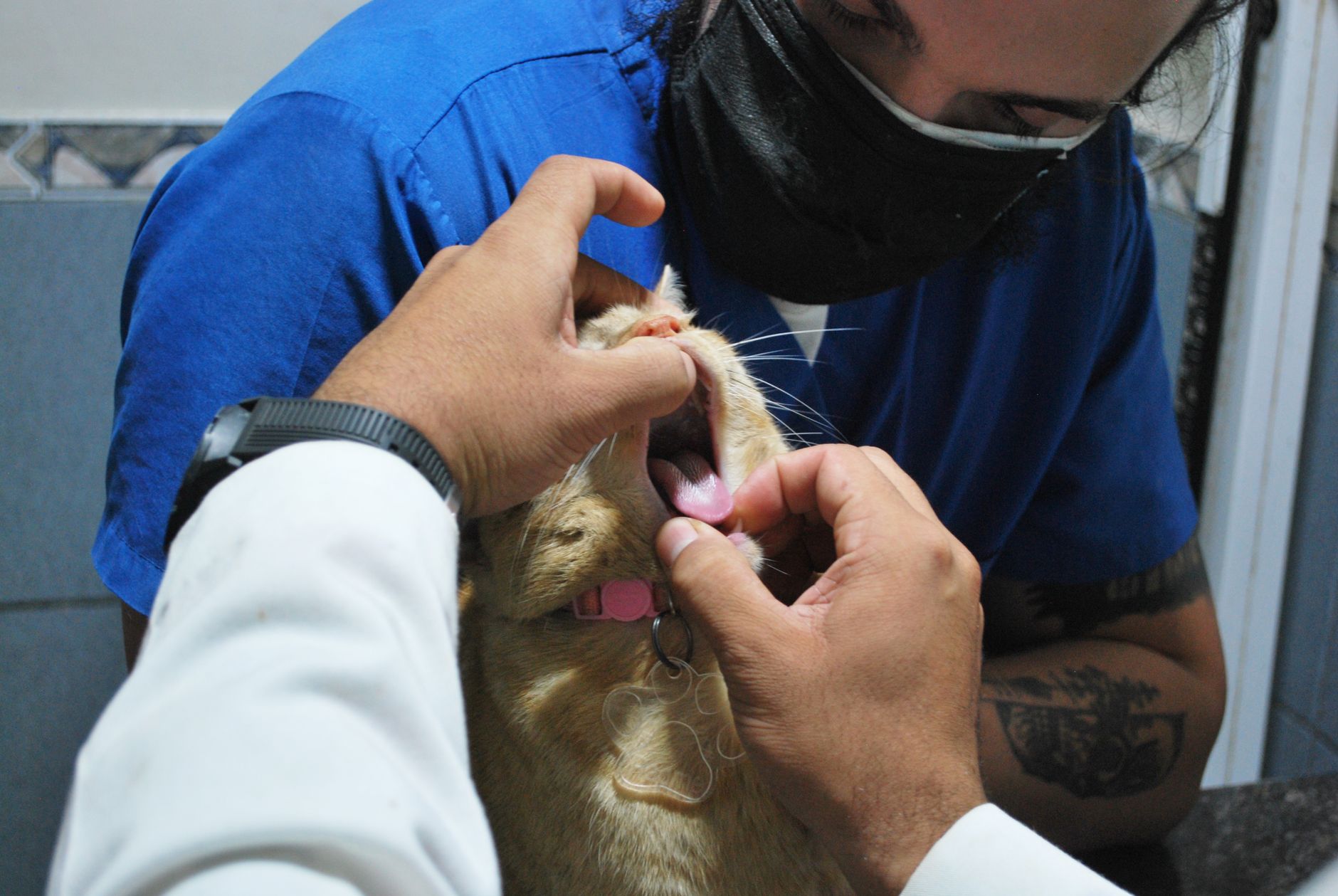
No part of this workup matters more than how the urine was obtained. A sample caught in a clean tray or off the floor is useful for measuring concentration and screening for crystals, sugar and protein, but bacteria found in it cannot be trusted to have come from the bladder. The sample your veterinarian relies on to confirm infection is collected by cystocentesis – drawing urine directly from the bladder with a fine needle through the body wall. Because that route bypasses the lower urinary tract and skin entirely, any bacteria that then grow on culture genuinely came from inside the bladder. This is also why a full, methodical reading of the sample matters, the kind walked through in our step-by-step guide to interpreting a cat’s urinalysis and in the wider context of what feline urinalysis can reveal beyond infection.
| Collection method | What it is good for | How far to trust bacteria found in it |
|---|---|---|
| Free catch / litter tray | Concentration, glucose, protein and crystal screening. | Low – contamination from skin and surfaces is common. |
| Catheter sample | Useful when cystocentesis is not possible. | Moderate – the catheter can carry lower-tract bacteria upward. |
| Cystocentesis (needle from bladder) | Confirming a true infection by culture. | High – bypasses the contaminating routes entirely. |
See the full reference intervals for the cat — every value cited to the laboratory document or paper it came from.
Reading the Urine Itself: Concentration, Cells and pH
Once the sample is in hand, two features carry most of the weight. The first is urine concentration, reported as specific gravity. A healthy cat conserves water and produces strongly concentrated urine; that concentrated, acidic environment is itself a defence against bacteria. When the urine is dilute, that defence is weakened – which is exactly why a cat that has lost concentrating ability, as happens in kidney disease, is more vulnerable to a real infection. The second feature is the microscopic sediment: white blood cells point to active inflammation, red cells to bleeding or irritation, and visible bacteria alongside those cells make a genuine infection far more likely than bacteria seen in an otherwise clean sediment. The reference figures below come from a verified feline panel, but the range printed on your own cat’s report always governs, because it is tied to the laboratory’s own method.
| Parameter | Normal reference range (cat) | |
|---|---|---|
| Urine specific gravity | 1.035-1.060 | |
| Urine protein:creatinine ratio (UPC) | 0-0.2 | |
| White blood cells (sediment) | Assay-specific, the lab’s range governs | |
| Urine pH | Assay-specific, the lab’s range governs | |
| Urine culture | No growth from a sterile sample |
A raised protein:creatinine ratio in this setting is read with care, since inflammation and bleeding from an infection can themselves spill protein into the urine, a nuance covered in our overview of how to read a complete feline report.
Why True Infection Is Uncommon in Young Cats
One of the most useful facts in feline urinary medicine is counter-intuitive: a young, otherwise healthy cat that strains, passes bloody urine and visits the litter box constantly usually does not have a bacterial infection at all. Most of these cats have feline idiopathic cystitis, an inflammation of the bladder without bacteria, in which a culture comes back negative. That is why throwing antibiotics at every straining young cat is the wrong reflex – it treats a bug that is not there. Bacterial infection becomes meaningfully more likely when something has changed the urine or the cat’s defences, and that shift is strongly tied to age and to specific underlying diseases.
| Cat profile | What the veterinarian expects |
|---|---|
| Young, otherwise healthy | Idiopathic cystitis is far more common than infection; a culture confirms before any antibiotic. |
| Senior cat | True infection becomes more plausible; underlying disease such as chronic kidney disease is actively sought. |
| Diabetic cat | Sugar in dilute urine invites bacteria; glucose and fructosamine are checked. |
| Cat with dilute urine | Lost concentrating ability lowers the natural barrier; kidney markers are reviewed. |
The Blood Work That Surrounds a Urinary Infection
Blood tests do not diagnose a bladder infection – the urine does that – but they answer the two questions that decide how worried to be: what let the infection happen, and has it spread. Kidney values and electrolytes show whether the kidneys are involved or whether the urine is too dilute to defend itself, which is the territory of feline kidney testing and the early-warning marker SDMA. Glucose flags the diabetic cat whose sugary urine encourages bacteria. A complete blood count, and inflammatory markers when needed, show whether the body is mounting a wider response than a simple lower-tract infection would explain.
| Blood test | What it is looking for | Why it matters here |
|---|---|---|
| Creatinine and BUN | Kidney involvement and concentrating ability. | Kidney disease both predisposes to infection and can be worsened by one travelling upward. |
| Phosphorus | Advancing kidney disease in older cats. | A rising phosphorus signals the kidney problem behind a recurrent infection. |
| Glucose | Diabetes mellitus. | Sugar in the urine is a classic setup for bacterial growth. |
| White cell count | A body-wide inflammatory response. | A marked rise raises concern that infection has reached the kidney rather than staying in the bladder. |
| SAA and fibrinogen | Active inflammation. | Inflammatory markers such as SAA and fibrinogen help gauge severity. |
When a Urinary Problem Cannot Wait
The bacteriuria itself is almost never the emergency; obstruction is. A cat – and a male cat especially, because of his narrow urethra – that strains repeatedly while passing little or no urine, cries in the litter box, or paces and licks at himself may have a blocked urethra. Once urine cannot leave, waste products and potassium climb quickly, and within a day or two that can become life-threatening. Treat any cat that is straining unproductively, vomiting, or hiding and very flat as a same-day case rather than a routine recheck. Even when there is no blockage, a cat that has stopped eating or seems systemically unwell alongside a urinary problem deserves prompt attention, much as the routine senior screening exists to catch trouble before it announces itself this loudly.
Treating the Cause, Then Confirming the Cure
When a culture confirms a true infection, treatment is aimed at the specific bacterium the culture grew and the antibiotic it proved sensitive to – not a guess. That is the practical reason the culture is worth the wait: it replaces a hopeful prescription with a targeted one and helps avoid breeding resistant bacteria. Just as important is dealing with whatever opened the door. A recurrent infection in a senior cat points back toward the kidneys; one in a diabetic cat points back toward glucose control. Follow-up usually means a repeat culture after treatment to prove the bladder is genuinely clear, rather than assuming so because the cat looks brighter. When infections keep returning despite clean courses of antibiotics, the workup widens to look for bladder stones, structural problems, or the underlying disease that keeps tipping the balance – the same systematic logic that runs through a full kidney-focused blood test interpretation.
What the Culture Adds That the Sediment Cannot
Seeing bacteria under the microscope and growing them in a laboratory answer two different questions. The sediment tells you what is in the sample at that moment, including organisms that arrived from the skin, the prepuce or the vulva during collection, and it cannot tell a living organism from a dead one or from a stain artefact. The culture asks whether those organisms can multiply, how many of them there are relative to the way the sample was taken, and which antimicrobials they remain susceptible to. That last part is what turns a suspicion into a treatment plan, and it is the reason a veterinarian may decline to treat on the sediment alone.
Collection method decides how the culture is read. Urine taken directly from the bladder with a needle bypasses the lower tract entirely, so any growth is meaningful. Urine caught mid-stream or lifted from a clean litter tray passes structures that carry their own organisms, so the laboratory expects some growth and interprets the count differently. This is why the same laboratory can call one sample positive and another contaminated using identical numbers, and why your veterinarian records how the sample was obtained on the request form.
Timing matters as much as technique. A sample taken after antimicrobials have started can produce a false negative, because the organisms are suppressed rather than absent, and a sample left at room temperature for hours can produce a false positive as the few organisms present multiply on the way to the laboratory. Refrigerating the sample and getting it to the practice promptly protects both directions of error. Where treatment has already begun, the culture is usually repeated after a washout period rather than trusted as it stands.
What follows a positive culture depends on the cat rather than the plate. A first, uncomplicated infection in an otherwise healthy cat is treated as a simple episode. Repeated growth, or growth in a cat with kidney disease, diabetes or a history of urinary obstruction, raises a different question: what is allowing the bladder to be colonised in the first place. There the workup turns toward imaging and the rest of the blood panel, because the infection is a consequence rather than the whole story.
A negative culture does not always close the question. If the sample was taken after antimicrobials had started, or if it stood warm for hours before reaching the laboratory, the result carries less weight and is usually repeated after a washout period. The response to treatment is informative in its own right: a cat whose signs settle quickly and stay settled behaves like a simple episode, while a cat whose signs return within weeks is saying that something in the bladder or the kidney allows colonisation to happen again. That second picture turns the workup toward imaging, a cleanly taken repeat culture and a careful look at the rest of the panel for the diseases that predispose to it.
It is also worth separating discomfort from infection. Straining, frequent squatting and blood-tinged urine are what owners notice, and in cats those signs far more often come from bladder inflammation without bacteria than from a true infection. The distinction changes the treatment completely: antimicrobials help the infected cat and do nothing for the inflamed one, where pain relief, water intake and reducing stress carry the case. That is why your veterinarian tests rather than treats on the signs alone, even though the two look identical from the sofa.
Frequently Asked Questions
Can my cat be treated before the culture result comes back?
Sometimes, when the cat is uncomfortable or unwell enough that waiting is unreasonable. Your veterinarian then chooses initial treatment on the clinical picture and adjusts it once the culture reports, which is why the sample i