Dog Blood Work Explained — CBC and Chemistry Panel
Wondering what a full interpretation looks like? See a sample report →
Two Panels, Two Different Questions

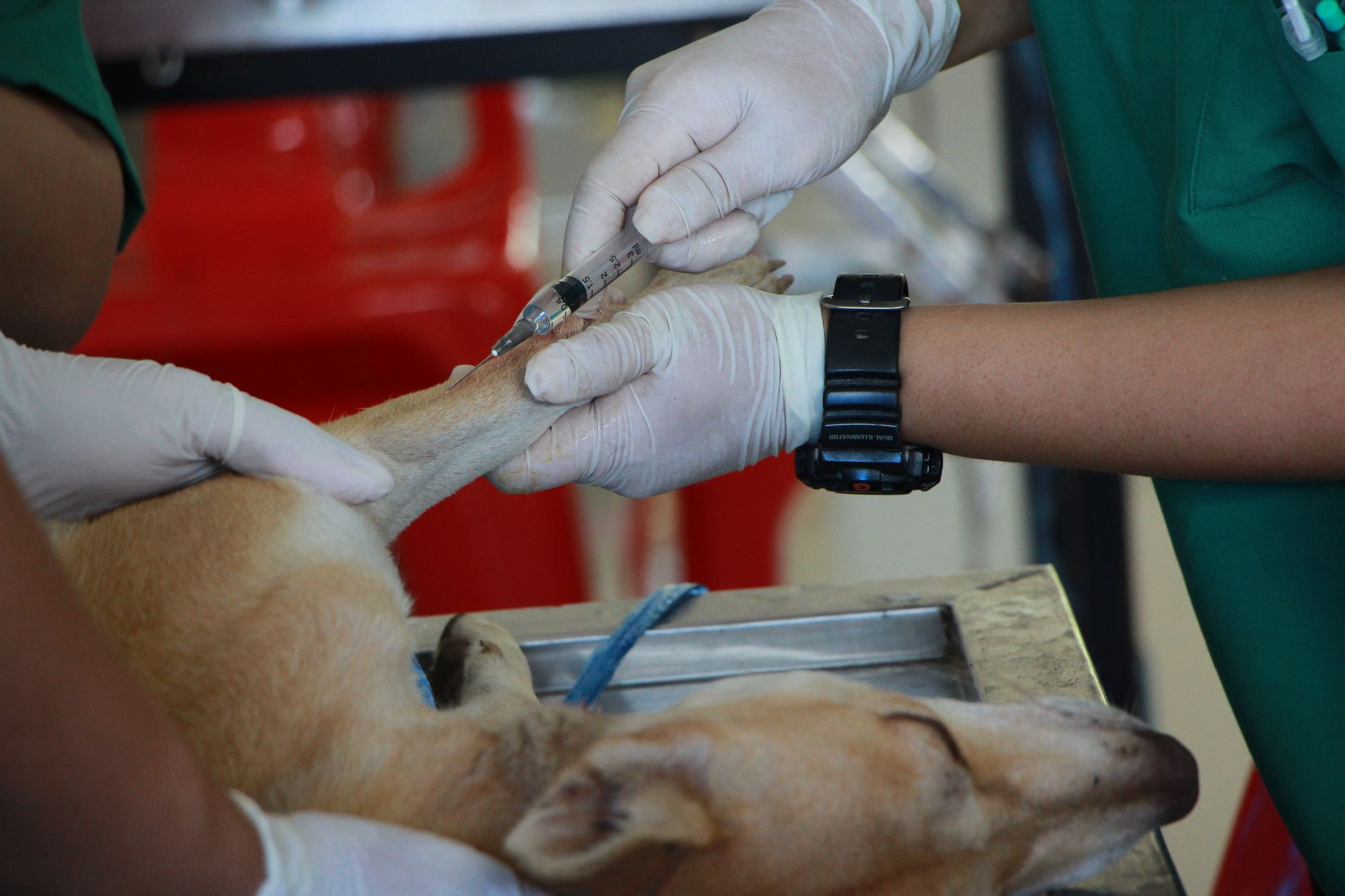
When a veterinarian says they are running “blood work” on your dog, they almost always mean two tests drawn from the same sample. The first is the complete blood count, which examines the cells suspended in blood: the red cells that carry oxygen, the white cells that fight infection, and the platelets that help blood clot. The second is the serum chemistry panel, which looks past the cells at the fluid they float in and measures the substances dissolved there – enzymes that leak from organs, proteins the liver makes, electrolytes the kidneys balance, and the waste products those kidneys are supposed to clear. The CBC asks “what are the cells doing?” and the chemistry panel asks “how are the organs working?” Neither answers the other’s question, which is precisely why they are run as a pair, and why a thoughtful read of a report means moving between the two rather than ticking off flagged values one at a time. If you want to walk through a real printout line by line, the step-by-step guide to reading a complete canine report is the natural companion to this overview.
What the CBC Is Really Counting
The CBC breaks blood down into its three cellular populations, and each tells a different kind of story. The red cell line – reported as the haematocrit, red cell count and haemoglobin, with index values such as MCV and MCHC describing the cells’ size and colour – is where anaemia shows up when it is low and where dehydration or other causes register when it is high. A drop here is what sits behind a low haematocrit and red cell count in dogs. The white cell line tracks the immune response and is the value that climbs with many infections and inflammatory states, the pattern explored in an elevated white cell count in dogs. Platelets are the clotting cells, and a low count – covered in low platelets in dogs – is taken seriously because it bears on the risk of bleeding. The reference intervals below give a feel for where these lines normally sit in an adult dog.
| CBC parameter | Normal reference range (adult dog) |
|---|---|
| Haematocrit (HCT) | 41-58% |
| Red blood cells (RBC) | 5.7-8.5 x10^6/uL |
| Haemoglobin (HGB) | 14.1-20.1 g/dL |
| White blood cells (WBC) | 5.7-14.2 x10^3/uL |
| Neutrophils | 2.7-9.4 x10^3/uL |
| Platelets | 186-545 x10^3/uL |
See the full reference intervals for the dog — every value cited to the laboratory document or paper it came from.
What the Chemistry Panel Reads Out

Where the CBC counts cells, the chemistry panel measures the chemistry of the serum, and it is usually read in clusters that map onto organ systems. The liver enzymes – ALT, AST, ALP and GGT – report on whether liver cells are leaking or bile flow is impaired; a high ALT is the classic hepatocellular signal discussed in high ALT in dogs, while ALP carries its own, broader set of causes covered in high ALP in dogs. The kidney cluster – urea (BUN), creatinine and SDMA – reflects how well the kidneys are filtering, and is the focus of the kidney marker overview, with SDMA in particular flagging earlier change and urea carrying its own list of contributors. The proteins, electrolytes and metabolic markers fill out the rest of the picture. The table below gathers a representative slice of the canine chemistry panel.
| Chemistry marker | Organ system it speaks to | Normal reference range (adult dog) |
|---|---|---|
| ALT | Liver cell integrity | 17-95 U/L |
| ALP | Bile flow, bone, hormones | 7-115 U/L |
| Total bilirubin | Liver and bile, red cell breakdown | 0-0.2 mg/dL |
| BUN (urea) | Kidney filtration, hydration | 9-26 mg/dL |
| Creatinine | Kidney filtration | 0.6-1.4 mg/dL |
| SDMA | Early kidney filtration change | 0-14 µg/dL |
| Albumin | Liver production, protein loss | 3.2-4.1 g/dL |
| Globulin | Inflammation, immune activity | 1.9-3.7 g/dL |
| Glucose | Metabolism, pancreas | 68-104 mg/dL |
| Calcium | Parathyroid, kidney, certain cancers | 9.4-11.1 mg/dL |
| Potassium | Kidney, adrenal, hydration | 4.1-5.4 mEq/L |
Why the Two Panels Are Read Side by Side
The real value of running a CBC and chemistry panel together is that each can sharpen, or completely change, the meaning of the other. A raised bilirubin on the chemistry panel reads one way if the CBC shows anaemia – pointing toward red cell breakdown – and quite another if the red cells are normal and the trouble looks like the liver or bile ducts; that fork is exactly what elevated bilirubin in dogs turns on. A high white cell count is more convincing as a sign of inflammation when an inflammatory protein or a stress-pattern chemistry sits beside it. Dehydration nudges several values at once across both panels, so a slightly high haematocrit alongside a high urea can simply mean a dog that needs fluids rather than two separate diseases. The point is not to read each value against its own reference line and stop, but to ask whether the abnormal results tell a single coherent story.
The Trap of the Single Flagged Value
It is unsettling to see a value on the printout marked “high” or “low,” but a flag is not a diagnosis. Reference intervals are deliberately built so that a small proportion of entirely healthy dogs will fall just outside them, which means a marginal result in a dog that feels well is often repeated rather than chased. What a veterinarian weighs instead is the size of the change, whether several related markers move in the same direction, the dog’s age, the medication and diet history, and how the dog actually looks. A practical sense of which findings are common and what usually lies behind them is laid out in a practical guide to common canine blood test abnormalities. Age, in particular, shifts the baseline: many markers read differently in an older dog, which is why senior dog blood tests are interpreted against age-appropriate expectations rather than a young adult’s. The pancreatic markers are a good example of why context wins – a borderline lipase rarely means much on its own, as the discussion of lipase specificity in dogs makes clear.
Turning a Report Into Next Steps
Once the panels are read together, the question becomes what, if anything, to do. Sometimes the answer is simply to recheck a borderline value in a few weeks and watch the trend, because the direction of travel over time usually carries more weight than a single reading. Sometimes a clear pattern – a cluster of kidney markers rising together, or a liver picture that fits the clinical signs – prompts a focused next test, such as a urine sample, imaging, or a more specific assay. And sometimes the blood work is reassuring and the conversation moves to the symptoms that prompted it in the first place, since a normal panel is read alongside how the dog is doing rather than treated as a guarantee on its own. Whatever the route, the report is the starting point of a conversation with your veterinarian, not the end of one – its job is to narrow the field and aim the next decision, which is always made for the individual dog in front of the clinician.
What Happens After the Report Comes Back
A blood panel rarely ends the conversation; it decides which conversation to have. Where everything sits inside the intervals and the dog is well, the panel becomes a baseline – its value is the comparison it makes possible in a year or in an emergency at two in the morning. Where one value sits just outside, the usual next step is a repeat rather than a referral, because biological variation, a stressful visit or a difficult sample explain more borderline results than disease does.
Where a value is clearly abnormal, the panel narrows the field rather than naming the answer. A rise in the liver enzymes says the liver has been disturbed; it does not say by what, and the next tests are chosen by what the rest of the panel and the dog look like. That is why two dogs with the same flagged value can leave with different plans, and why asking which single value is the problem often misses the point.
Timing shapes the whole exercise. Some values change within hours of a meal, some within minutes of a struggle in the waiting room, and some drift over months. Knowing which is which is what separates a result that needs acting on today from one that needs watching. Your veterinarian will often say when to repeat rather than what to fear, and that instruction is the most useful part of the report.
Keep the printed report. Laboratories differ in method and in the intervals they publish, so a value that looks alarming beside an internet range may be ordinary beside the one on your own page. Having the previous report in hand also turns the next visit into a comparison, which is worth more than any single number on either sheet.
One more thing worth saying plainly: a panel is a screening tool, not a guarantee. A dog can have an early problem that has not yet moved any value, and a well dog can produce an odd figure that means nothing. That is why the panel is read next to the examination, the history and, where possible, the previous report – and why your veterinarian may recommend repeating a test rather than adding five more.
Frequently Asked Questions
Does one value slightly outside the range mean my dog is ill?
Usually not on its own. Reference intervals are built so that a proportion of healthy animals fall outside them, and a stressful visit, a recent meal or a difficult sample can nudge a figure over the line. That is why a borderline result in a well dog is normally repeated before anything else is done.
What should I do with my dog’s blood test report afterwards?
Keep the full printed copy, not a summary. It carries the laboratory’s own reference intervals, which differ between analysers, and it lets the next panel be read as a trend rather than in isolation. If your dog is ever seen out of hours, an older report is one of the most useful things you can hand over.
What is the difference between a CBC and a chemistry panel in dogs?
A complete blood count looks at the cells floating in the blood – red cells, white cells and platelets – while the chemistry panel measures dissolved substances such as enzymes, proteins, electrolytes and kidney waste products. The CBC tends to speak about anaemia, infection and clotting; the chemistry panel speaks about how the liver, kidneys and other organs are working. They are run together because each answers questions the other cannot.
Does one abnormal value on my dog’s blood work mean something is wrong?
Not necessarily. A single value sitting just outside the reference interval, in a dog that looks and behaves normally, is often repeated rather than acted on. Reference ranges are built so that a small share of perfectly healthy dogs fall slightly outside them. Your veterinarian reads a flagged value against the whole panel and the dog in front of them, not in isolation.
Why does my dog need to fast before blood work?
Fasting is usually requested so that a recent meal does not cloud certain results, particularly glucose, triglycerides and the pancreatic markers. A fatty sample can also physically interfere with how the analyser reads several values. Follow the fasting instructions your veterinary clinic gives, since they depend on which tests are planned.
Do puppies and senior dogs have different normal ranges?
Yes, in places. Growing puppies normally run higher on some bone and phosphate-related values, and several markers drift with age, which is why a result is interpreted in light of the dog’s life stage. The laboratory’s own age-appropriate interval, printed on the report, is always the reference that governs.
What does it mean if my dog’s kidney and liver values are both abnormal?
It can point to a problem affecting more than one organ, to a single illness with knock-on effects, or simply to two unrelated findings showing up on the same day. This is exactly the situation where the pattern matters more than any one number, and where your veterinarian uses the rest of the panel, the history and an examination to work out which explanation fits.
Can my dog’s blood work be normal and still miss a problem?
Yes. Blood work is powerful but not complete – some conditions only show up on imaging, urine testing or specialised assays, and early disease can sit within normal ranges. A normal panel is reassuring, but it is read alongside symptoms rather than treated as a clean bill of health on its own.
How often should a healthy dog have blood work done?
There is no single rule. Many veterinarians suggest periodic screening that becomes more frequent as a dog ages or carries a chronic condition, and baseline blood work before anaesthesia or starting certain long-term medicines. The right interval is a decision for your veterinarian based on your individual dog.
Should I be worried before I have spoken to my veterinarian about the results?
A flagged value on a printout looks alarming out of context, but the interpretation is what matters. The size of the change, the direction it is moving over time, and whether your dog is well or unwell all shape the meaning. Use the report to prepare questions for your veterinarian rather than to reach a diagnosis on your own.
Reference intervals — chemistry
Values below come from the dog chemistry reference panel; each figure links to the source it was taken from.
| Parameter | Reference interval (dog) |
|---|---|
| ALT | 17-95 U/L |
| AST | 18-56 U/L |
| ALP | 7-115 U/L |
| GGT | 0-8 U/L |
| BUN | 9-26 mg/dL |
| Creatinine | 0.6-1.4 mg/dL |
| Glucose | 68-104 mg/dL |
| Phosphate | 2.7-5.4 mg/dL |
| SDMA | 0-14 µg/dL |
| Triglycerides | 23-102 mg/dL |
Reference intervals — hematology
Values below come from the dog hematology reference panel; each figure links to the source it was taken from.
| Parameter | Reference interval (dog) |
|---|---|
| MCV | 64-76 fL |
| MCHC | 33-36 g/dL |
| Platelets | 186-545 x10^3/uL |
Sources & Further Reading
This article draws on the following authoritative veterinary references. For your dog’s individual case, consult a licensed veterinarian.
- Cornell University AHDC — eClinPath — canine serum chemistry reference intervals (Roche Cobas c501 analyser, established in ≥120 healthy adult dogs); the evidence base for the CBC and chemistry ranges cited above.
- Merck Veterinary Manual — interpretation of the complete blood count and serum biochemistry in dogs, including the cellular indices and organ-marker clusters.
- ACVIM Journal of Veterinary Internal Medicine — consensus guidance on the laboratory evaluation of canine kidney and liver disease.